Coping with the First Year of Graduate School

The cracked ceiling in the graduate student lounge was the last thing I remembered seeing before I walked into class late one day. Just minutes before, I had stretched out on a ripped faux leather couch and told myself, “I will just look at the ceiling until the bell rings. I will not shut my eyes.”

While I do remember looking at the ceiling for a long time, I never heard the bell ring because as I stared above, I fell asleep—with my eyes wide open. I’d spent so many sleepless hours believing I couldn’t measure up to my peers that all of that worrying caught up with me.

My classmates sounded so smart every time they opened their mouths to speak, so I kept my mouth shut and wrote down all of the theories and authors they rattled off so easily from memory. Later, I spent time in the library reading and studying, which still didn’t seem to build my confidence. My graduate program was in literary theory and literature from Spain, so all of my classes were completely in Spanish and Spanish was not my first language. I started to blame my language ability for my lack of understanding, but I quickly realized I wouldn’t have understood my peers, even in English, because they had read and studied things I hadn’t been exposed to yet.

After the first month in my program, I ran to the English department next-door on campus and begged to be enrolled in a graduate program there. The receptionist was kind, but she told me to finish my master’s degree in Spanish first and then consider English for a doctoral program. However, by the time I completed my master’s degree, I knew I wanted to continue with a doctorate in Spanish literature.

So, what changed my mind and how did I get through the first year? Developing the ability to more confidently write in another language—and get over my fear of writing altogether—pushed me through.

My first semester as a master’s degree student included a course in which I was mixed in with second-year doctoral students. They were quite intimidating because many were native speakers of Spanish from all over Spain, South America, Mexico, and Central America. They had also read and studied theories I hadn’t learned yet. These students seemed to be applying theories in sophisticated ways to the novels we were assigned to read. It seemed like it would take me so long to get through each of those novels, while taking meticulous notes on symbolism and themes. When I would come to class, I was prepared to talk about what I read, but the other students were talking about things that I hadn’t exactly noticed right away when I took notes.

I thought I could get by with just remaining silent, but one class assignment required us to get up and present a “reflection” paper, based on one of the novels we read. I knew enough to realize that a “reflection” paper was not an emotional outpouring of how I felt when I read my assigned novel. I knew I would have to provide some kind of analysis.

In college, I didn’t hesitate to start my papers early so that I could revise them, but this first graduate assignment caused me to procrastinate for the first time in my academic career. Each day, I would stare at a blank piece of paper and tell myself that any kind of analysis I might provide would not be good enough and that my Spanish would not be good enough, either. I continued to procrastinate until just a few days before the presentation, which is when my anxiety caused me to believe that I had to write this presentation because I didn’t have a “back-up plan” if I failed graduate school.

The first thing I did was to sit in a comforting and familiar spot: my futon in the living room of my first apartment. I cleared off the coffee table and considered being kinder to myself than I had been before. Maybe I would tell myself that I knew more than I thought I did. Maybe I was enrolled in and accepted into this program for a reason. Maybe this novel spoke to me in a way that was perhaps important. At the heart of my assigned novel were themes of social justice, community, and resilience. What was wrong with discussing those themes, through the symbols that repeated and emerged throughout the text? So, I began to write, in Spanish—a language I hadn’t quite learned to master yet.

In just a few hours, I finished in enough time to run my presentation past a few peers from my class. These intimidating “giants” were extremely generous and kind. They listened for my thesis statement. They assured me I had one. They even told me they could understand what I was saying—despite a few word choice and agreement errors I could fix and rewrite.

When I stood up to present my paper, I knew I hadn’t mastered the theories the doctoral students already applied to novels so skillfully, but I knew I had something to say and that what I noticed in my assigned novel mattered. I wish I could say that I trusted myself from then on, but I always had my doubts. With each paper and presentation though, I learned more about the language I was studying and more about myself.

Spending time with my eyes glued to the ceiling, too afraid to shut them for fear of falling asleep and missing something, was no way to live. Ceilings, after all, are limiting and graduate school is the perfect time to learn to push past such perceived limitations—fully awake, with eyes set on a more expansive view.

Cecilia Kennedy, PhD

Paper/Rock Writing Consultation

If you need help with writing assignments or advice for getting through graduate school, I’m happy to lend a hand. Contact me at ckennedyhola@gmail.com



Hide the Obvious to Hook your Readers

At a coffee shop in a quiet neighborhood, Staci pulls open the door and takes in the smell of mocha, which mixes with the scent of freshly baked pastries. She spots her friend Sofia, who looks up from her laptop to greet Staci.

“Wow! You’re wearing clothes!” Sofia says.

“Obviously. I typically wear clothes when I go out in public. Most people do,” Staci replies.

“Clothes are important because they protect us from the elements.”

“Yes—I kind of know this already. What’s wrong with you?”

Sofia continues to smile and chat about other topics such as the fact that the sky is blue and that the place where they meet sells coffee. Staci begs Sofia to tell her something new, but Sofia can only tell her that frosting is typically made with sugar, which is a sweet substance. After a few more minutes, Staci wishes Sofia well, but she tells her she really must go.

Though Staci, in the scenario above, tried to continue to visit with Sofia, she ran out of patience. Likewise, most readers, when they see an introductory paragraph that makes a series of obvious statements, will stop reading. While essays can begin in a general way and then transition into a thesis statement, there is such a thing as being too general. Consider the following sentences, which often pop up as introductory sentences in essay writing:

  • ___topic has been debated a lot recently.
  • Art/literature/history/etc. has been studied a lot lately.
  • Life is hard.
  • Children don’t come with an instruction manual.
  • Love is important.

These kinds of statements may seem to serve as a starting point for a more specific topic, but they won’t effectively hold onto your reader. Inventing a new, catchy, and earth-shattering statement might not come naturally and could be too time consuming for most writers to attempt. However, there are easier methods you could use to engage your readers. A few are listed here:

1) The striking quote. If you are analyzing a work of literature or studying a topic that uses outside sources, you could identify a unique and interesting quote from those sources, which could help readers anticipate your thesis statement. As you search for quotes though, you could ensure that the information and word choices in the quotes really are unique and can’t be stated any other way. Consider the following made-up examples:

“Nursing is a profession that requires hours of hands-on practice, applications of theories, and the ability to set boundaries and improvise as well” (Stasia, 2017).

“A bedpan and a pat on the back won’t cut it these days because nurses are expected to save the day with more than a few super powers” (Sooper, 2018).

The first quote above offers information that could probably be summarized and used as a supporting point for an argument in the body of a paper. It doesn’t contain vivid imagery that could “hook” readers and draw them in. However, the second quote uses interesting language that creates concrete pictures in the minds of the readers. A bedpan, a pat on the back, and the super-hero-nurse who “saves the day” make a memorable impression. This kind of quote then, could certainly “save the day” for a reader.

2) The personal anecdote or description. This method might not work for every kind of essay, especially if the assignment indicates a more objective approach. However, a brief sentence or two that describes a specific situation that relates to a topic or problem to be solved could be effective.

Example: There are many problems with vandalism in neighborhoods.

Revised: A local pocket park shows signs of vandalism. The bright green bench, where parents typically sit and watch their children play, is now covered in spray paint. The swings have been torn down and, in order to repair the damage, neighborhood association fees will rise.

The first example above is too general for readers to fully picture or appreciate. The revised example, on the other hand, describes a specific incident that the writer has experienced. From this example, readers can perhaps anticipate a discussion regarding vandalism, its effects, and how this problem might be solved on a local level.

Of course, there are other methods for introducing essays, but they might not always be reliable or effective. For instance, posing a question could draw readers in, but this approach could backfire in a couple of different ways:

1) What happens if readers do not answer the question the way you want or expect them to answer?

Example: Is it right to create classrooms that don’t have any technology in them?

The question above might spark some discussion, but if a reader thinks it’s perfectly fine to create classrooms that don’t use technology, then that reader may not care to read on.

2) Some assignments call for objective language that avoids the use of second person (you/your/you’re, etc.) Asking a question such as, “Would you want to drink water out of a plastic bottle or a metal container?” already violates that rule in the first line. This kind of opening question would not work for this assignment.

Sometimes, writers are encouraged to begin with a shocking fact or statistic, but facts and statistics are already thrown at readers from the minute they get up in the morning until the moment they go to bed. Adding in another statistic or fact to the reader’s day might not seem so “shocking.” As a result, the reader might move on to something else. Facts and statistics then, could be more useful in body paragraphs to support a claim or observation.

In general, writing—even “boring” essay writing—provides an opportunity to engage in conversation with your readers. If the conversation starts with statements both you and your reader have heard before, your reader may disappear before you’ve begun to really speak about the things that matter.

Cecilia Kennedy, PhD

Paper/Rock Writing Consultation

For extra help with introductions and essay/report writing in general, I’m happy to lend a hand. Contact me at paperrockwriting.com (ckennedyhola@gmail.com)


Avoiding “Pantry Paragraphs” in Report Writing

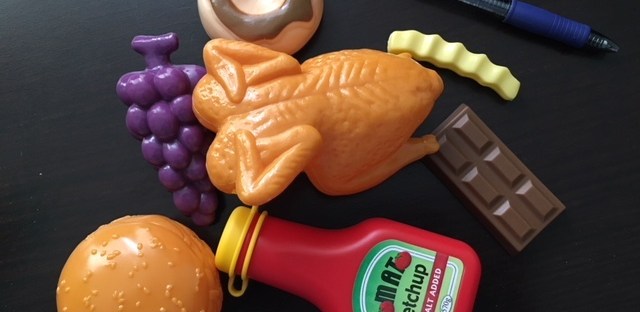
I have lasagna noodles, cornflakes, black beans, peanuts, and apple cider vinegar in my pantry right now. If I threw these ingredients into a pot and cooked them, my guests would most certainly ask, “What possessed you to do this?” The only answer I’d be able to give is, “I took what I had on hand and I put it all together. It’s food, right?” Though the common “theme” in my meal is “food,” the ingredients won’t blend very well.

In a similar manner, report writing sometimes starts with “ingredients” given to us in the form of questions to answer and shape into paragraphs. However, if we throw all of the answers together in one place, we’ll end up with “pantry paragraphs” that include items from the pantry that might not necessarily go together. Simply answering the questions provided might not be enough to supply a cohesive answer that showcases our best efforts.

Effective paragraph writing then, not only answers the questions at hand, but also includes a meaningful topic sentence that previews the material that readers can expect to find. Additionally, it explains why the information they are about to read is important. For these reasons, topic sentences are powerful tools to help pull paragraphs in a report together and highlight important relationships between evidence provided and claims made.

Without topic sentences, the paragraphs in a report could appear to be a jumbled accumulation of ideas related to a topic, but the relationship between those ideas may not be evident to outside readers. For instance, here’s a sample pantry paragraph that answers a list of questions required for a hypothetical report for an organization. Without the questions on hand, it is difficult to understand why the details in this paragraph have been selected:

Yes, our organization does serve the community. It serves the community in many different ways. Volunteers will donate time, talent, and treasure at local soup kitchens and help out on community cleanup days. Some challenges in serving the community include getting the employees and administration to see the value in giving up work time in order to serve the community. However, we can gain valuable partnerships by donating time and talent that may pay off for us in the future, while helping meet community needs. Plans going forward include incentives to promote excitement about pitching in, and forming committees to combine community needs with professional development opportunities that could help employees advance, while also serving the local area.

 After examining this paragraph, readers will notice that topics seem to shift.  The ways in which this organization serves the community suddenly morph into the challenges and plans for the future. Some interesting ideas emerge, but they’re not developed enough. Finally, the opening sentence appears to be an abrupt, unnatural, and obvious attempt to answer a “yes” or “no” question. How then, could this paragraph be saved?

One way the writer can fix this paragraph is to read through each sentence again and ask, “How do these topics fit together? What is the main idea that readers need to know and why?” It seems important to tell readers of this report that this organization does engage the local community in meaningful ways that also present challenges and opportunities, for which there are solid plans in place. Writing a topic sentence that summarizes these ideas offers at least two structural techniques for readers to follow:

1) The presence of a claim that can be supported with evidence and details: This entity supports its community in meaningful ways and concrete plans are in place to address challenges and opportunities. After a sentence that expresses these ideas, readers can then expect to see examples and evidence, which will directly support the claim that’s made.

2) A preview of topics to be covered: The opening sentence also previews the topics that readers can expect to find, in the order in which they are mentioned. In this way, readers can prepare for the information that comes next.

Answering questions in a report then, is an important starting point. However, paragraphs that result from these questions and answers may require an extra step or two. Careful reflection can help us develop topic sentences that pull the ideas together, give them a purpose and shape, and allow examples or evidence to stand out. They make the difference between throwing mismatched ingredients into a pot and blending just the right details to win favor with an audience.

Cecilia Kennedy, PhD

Paper/Rock Writing Consultation

Need extra help with report writing? I’m happy to lend a hand. Contact me at paperrockwriting.com (ckennedyhola@gmail.com)