Creative Writing and Scholarship Writing Workshops I’m Offering This Summer

IMG_2097

–Horror in a Flash: Horror Flash Fiction Writing. Stormy nights are yours to write, slash, and boil down to 1,000 words or less. May 24th-June 14th, Thursdays: 4 p.m.-6 p.m. Ages 16+ For registration and course details go to http://www.schack.org/classes/horror-in-a- flash-horror-flash-fiction-writing/

–Blog it Out: Creating Your Personal Blog. Enter the creative and dynamic world of blogging by sharing your story. June 22-July 20 (skipping July 6th). Fridays, 4 p.m.-6 p.m. Ages 16+ For registration and course details go to http://www.schack.org/classes/blog-it-out- creating-your-personal-blog/

–The Art of the Scholarship Essay. Are you applying for college or graduate school? Is a personal essay part of the application process? If so, this course will help you craft a “winning-chance” essay that makes your personal experience shine. June 27- July 25 (skipping July 4th) Wednesdays, 4 p.m.-6 p.m. Ages 16+ For registration and course details go to http://www.schack.org/classes/the-art-of-the-scholarship- essay/

Blending Quotes in MLA Format

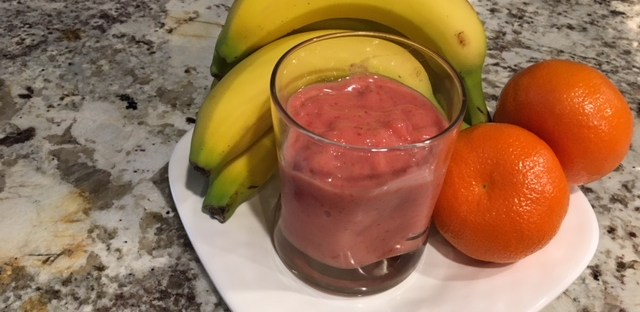
When a large chunk of fruit somehow finds its way into my strawberry smoothie, I’m temporarily distracted. I’m certainly not disgusted because the fruit is an ingredient I intentionally added to my smoothie recipe, but it definitely stands out because it doesn’t blend into the rest of the ingredients. My experience isn’t ruined, exactly, but I do notice the larger pieces I now have to slow down and chew.

In a similar manner, readers can become distracted when direct quotes are not blended properly into sentences. They have to slow down and read the words again or fill in if something is missing. Blending direct quotations into a sentence then, can help you cite your sources in a natural manner that won’t take away from the overall message you intend to deliver.

Fortunately, several techniques exist in MLA format for blending your quotations and adding in-text citations. Here are a few examples:

1) If you have already mentioned your author or your source in the sentence you’re writing before the direct quote, you could write a phrase that leads into the quote and add just the page number in parentheses, if one exists.

Fictional piece of text I want to quote directly:

–“Ingredients can function as variables that can be blended in creative and surprising ways.”

–Fictional author, source, and page number: B. Bobble, “Making Smoothies” (article title), and p. 45

Sample: In B. Bobble’s article, “Making Smoothies,” “ingredients can function as variables that can be blended in creative and surprising ways” (45).

In the sample above, I introduce the full name of the author and the article title. Then, I continue the sentence with the direct quote and place the page number in parentheses after the quote. A period falls outside the parentheses to show the reader I am done with this sentence. I also don’t use any abbreviations or punctuation within the parentheses, since I’m following the rules for MLA.

2) If you haven’t mentioned the author in your sentence, you could place the last name of the author and the page number in parentheses after the direct quote—if a page number exists.

Sample: When making smoothies, “ingredients can function as variables that can be blended in creative and surprising ways” (Bobble 45).

In the example above, I add a signal phrase to introduce the direct quotation. Otherwise, a direct quote by itself might seem abrupt, as in the example below:

Incorrect: Smoothies are fun to make. “Ingredients can function as variables that can be blended in creative and surprising ways” (Bobble 45).

When readers encounter the sentences above, they might not know how the first sentence relates to the direct quote that follows it. Adding a signal phrase that blends the two ideas together could make for a smoother transition.

Correct: Smoothies are fun to make because “ingredients can function as variables that can be blended in creative and surprising ways” (Bobble 45).

3) Consider using only part of a direct quote in order for the subjects and verbs to make sense in a sentence.

Fictional Example: “Since our world has become so predictable, smoothies make life spontaneous and flavorful again.” –from B. Bobble, page 52

Incorrect: Smoothies are fun to make as B. Bobble notes, “Since our world has become so predictable, smoothies make life spontaneous and flavorful again” (52).

The sentence above is incorrect because it creates a comma splice. Whenever you have two or more complete thoughts that could stand alone on their own and still make sense, a comma won’t be strong enough to separate those ideas. In the sentence above, the two complete thoughts that could stand alone on their own are:

1)   Smoothies are fun to make as B. Bobble notes.

2) “Since our world has become so predictable, smoothies make life spontaneous and flavorful again” (52).

To fix this cited material, I have to make the first part an incomplete thought that blends logically into the direct quote. I may even have to cut off part of the direct quote in order for the first part of my sentence to make sense and fit in.

Possible Solution: In a predictable world, smoothies are fun to create since, according to B. Bobble, they “make life spontaneous and flavorful again” (52).

In the solution above, I play around with the quote and summarize part of it while introducing an incomplete thought: In a predictable world, smoothies are fun to create since, according to B. Bobble, they . . .

Then, I shorten the direct quote to find a place where I can continue the sentence naturally: “make life spontaneous and flavorful again” (52).

As you look back through a draft in which you’ve used direct quotations then, you might ask yourself the following questions:

1) Does the sentence make sense when I read it back to myself?

2) Does the entire sentence, with the direct quote, have clearly identified subjects, verbs, and one main message?

If the sentence does not read smoothly or clearly as one “unit,” you could play around with the introductory phrase and the direct quote to find the perfect match. This method offers you a chance to fully understand your sources and communicate a consistent and clear message without any distracting lumps or bumps along the way.

For more help with blending quotes and MLA citation, contact me at ckennedyhola@gmail.com I’m happy to lend a hand.


Finding a Theme in Literature

A rainbow-colored unicorn might be easier to find than a theme in a work of literature. At least these fabulously mythical creatures would certainly stand out, if they existed. A theme, on the other hand, might be more elusive. If I could personify a theme—give it a voice—a conversation in the woods with it would go something like this:

Me: Excuse me, are you a theme?

Theme: Why, yes. How did you know?

Me: I didn’t really, I was just looking at that tree and something moved—and you were the same color as the tree and blended in—but then I looked closer and realized you weren’t exactly invisible, but you didn’t quite stand out either.

Theme: Well, I get that a lot. What can I do for you?

Me: What kind of theme are you? I’m thinking I can’t go wrong with “love,” so I’m guessing “love.”

Theme: That’s kind of vague now, isn’t it? If I’m “love,” what kind of love am I?

(Theme now scampers wildly about the forest.)

Me: Oh! We’re playing charades! I love charades! Okay, so you’re running about, but I can’t catch you. How about unattainable love?

Theme: Getting warmer. What happens when you try to catch me?

(Theme runs harder and faster, but I trip on a tree root in the forest and fall.)

Theme: There! What just happened, right there?

Me: I fell and I’m kind of not happy about it. I don’t want anything to do with you now.

Theme: So, if I’m unattainable love, what happens when you chase me?

Me: Nothing good, that’s for sure.

Theme: Bingo! In this case, if I’m “love” and “love” is unattainable, but you try to catch me anyway, nothing good can come from it.

In the conversation above, my first response to Theme’s question is vague. Many writers try to convince readers that the theme of a novel or poem is “love” because it’s an emotion universally felt by lots of people, but it’s also vague. “Love” is hard to picture sometimes because it takes many forms. So, a theme might have something to do with a universal feeling or emotion many humans share, but a theme isn’t always just that feeling or emotion. In a work of literature, the universally shared emotion or feeling can also be attached to a specific lesson learned and a result that follows.

So how does a writer find a theme?

Step 1: Read with an open mind. The first thing I do when I read is to just enjoy it with an open mind—highlighting passages I like—that “speak” to me in some way. I may not love everything I read, but I can always find something useful or meaningful. When I do, I make a note of it and read it again out loud to myself to hear the effect of the words written on the page. Then, I’ll ask myself, “Why do I like this?” Sometimes it’s because I like the word choices the author uses or the melody the words make when I speak them out loud. I’m not even looking for the theme at this point. I’m just looking for things that I like. In fact, in the conversation above, I was looking at a tree when Theme emerged. Sometimes that’s how discoveries happen. Writers are looking at something else before the theme finally appears—maybe several hours or days later. So, if you are looking for a theme, let yourself be distracted.

Step 2: Get distracted by “shiny things.” In a poem, a short story, a novel, or a movie, I look for things that repeat—just for fun. By “things” I mean concrete objects—objects I can see, taste, smell, touch, or hear—not abstract “things” like love or power or oppression. I also like to make a game of it, which goes something like this: I ask myself, “How many times will Character X spot a crow from his window in this chapter?” The crow, in the window, might mean something, but I’m not even worried about the meaning at this point, because this crow keeps popping up several times and I find that interesting. So, I’ll start making a list of how many times the crow appears and what happens or is going on in the plot of the story when it comes into view.

Step 3: Pause to think about the connections between the “shiny things” and the emotions felt as a reader. I’ll never forget the first time I read The Little Prince by Antoine de Saint-Exupéry. That snake! And the Prince’s reaction! The Prince just nonchalantly talks to the snake, knowing he is dangerous, but he’s also just having a matter-of-fact conversation. This poisonous snake could certainly kill the Prince and the Prince knows it, but accepts it. When I closed the book, I couldn’t stop thinking about this scene. That snake, in this scene, more so than the stars or the rose, for some reason, is my “shiny thing” from which I can’t turn. So, at that moment, I asked myself, “What am I feeling?” I felt some comfort, knowing the Prince knows what he’s getting himself into, but I also felt sadness, when I realized that something inevitable in this story does come: Death.

Step 4: Link the emotion felt to a broader, universally human experience, then add the lesson learned. From Saint-Exupéry’s story, I felt sadness when I witnessed the snake and the Prince talking about death. I know that death and life are universal, human experiences—just like love, fear, oppression, revenge, power, conflict, struggle, survival, identity, isolation—and many other themes. However, in this scene, in this work, there is a very specific lesson I’m beginning to grasp. The conversation is so calm and “normal,” that even though the snake does represent death, he also represents a way of life for the Prince. In the Prince’s case, death is a very necessary part of his life and vice versa.

Step 5: Check to make sure the theme can be applied to other parts of the story. If I decided, from my one scene in Saint-Expuréy’s story, that the theme is: Death is not the enemy of life, but a very necessary part of it, I would have to apply this idea to the narrator who tells the story as well. So, I’d ask myself, “How does the narrator learn this lesson?” To find the answer, I might turn to more “shiny things,” like the stars he gazes at each night.

Finding a theme then, is a process, so if you’re having trouble spotting one right away, don’t despair. Sometimes it seems like a theme is just supposed to pop out of the pages of a book or poem, but it doesn’t always happen that way. Spending time reading and reacting to the actions and word choices in a work of literature is not wasted time at all. It can lead to great discoveries hiding in plain view.

If you need help identifying themes in a poem or work of literature—or help coming up with a thesis statement for a literary analysis paper—I’m happy to lend a hand. Contact me: ckennedyhola@gmail.com


Eating a Hot Dog, an Orca Jumped Out of the Water and Surprised Me, Or: The Tale of a Misplaced Modifier

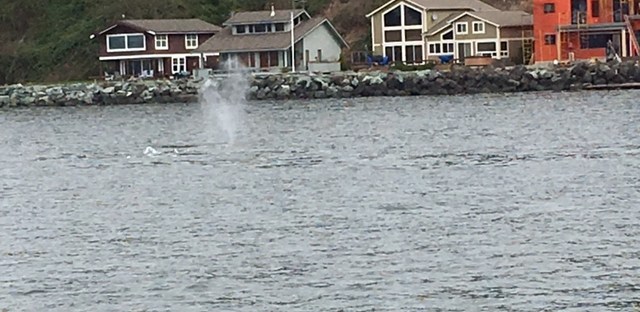
Hot-dog eating orcas are elusive creatures that sometimes only appear when writers create them unintentionally. In the title above, I’m probably the one eating the hot dog when an orca suddenly jumps out of the water. (In real life, this has never happened to me, but I do hope to see an orca someday “in the wild.”) However, the sentence I’ve originally created for my title makes it sound like the orca is eating a hot dog. As a result, readers will think my sentence is strange or laughable.

Yet, is this kind of mistake the worst “sin” a writer can commit? Definitely not. Grammar and spelling mistakes happen and most writing instructors believe that larger issues such as thesis statements, using sources correctly, organizing paragraphs effectively, and communicating new or important ideas take precedence over things like commas and semicolons. Only after a draft is completed and revised a few times, should writers concern themselves with sentence-level issues.

As a writer, I typically follow the practice of looking over larger issues first and then diligently correcting smaller grammar problems, but even writers make mistakes and I definitely made one just recently in my DIY blog, “Fixin’ Leaks and Leeks.” The mistake I made falls along the lines of the “misplaced modifier” that might make the meaning of a sentence silly or ridiculous. So, without further ado, I present to you the title I used in my blog: “Spritzing with Lavender and Awards.” Luckily, my blog is humorous in nature so, if readers found the title funny, they might have thought I did it on purpose, but the truth is, I just slapped a title onto my blog post after I finished writing. Then, I hit “publish.”

In my post, “Spritzing with Lavender and Awards,” I explain a recent trip to Friday Harbor to splurge on lavender-infused products after some kind and talented bloggers nominated me for blogging awards. (Letting loose in a lavender store is how I “roll” when I win awards nominations, apparently.) The lavender-infused product I buy, in the post’s description, is a “spritz” bottle of distilled water and lavender, which can be used for cleaning the house. In envisioning this post, I wanted to combine 1) a DIY cleaning project that used the lavender water and 2) the answers to the questions that came along with the awards nominations. In choosing the title for the piece, I shoved these two ideas together into one place, but they just didn’t quite work out. After encountering my title, readers would probably have the following questions:

1) Who or what is “spritzing” with lavender and awards?

2) How do awards “spritz?”

3) Who or what is being spritzed?

I should have written the following headline instead: “Spritzing the House with Lavender-Infused Water to Celebrate Blog Awards Nominations.” However, I didn’t. I could correct the error now, but then when I hit “update,” my hundreds of followers would get the same article again in their mailboxes, which could be annoying. So, I guess I’d rather be “wrong” in this case, than annoying. And, I’ll have plenty of opportunities to write less nonsensical titles and posts in the future.

With more formal writing though, I have a few tricks that I use to help ensure that I don’t make these kinds of mistakes, but I only employ them after I’ve tackled the thesis statement, arguments, sources, topic sentences, and overall organization:

1) Read the paper out loud slowly. When reading the paper out loud, I stop after each sentence and ask myself, “What is the main idea I’m trying to get across? What is the simplest way to get that message across?” If I see words I can cut, I do it. If I see sentences that contain too many ideas or adjectives or clauses that describe other parts of my sentence, I break them apart. Then, I re-examine the sentence to make sure it makes sense logically.

2) Let the paper sit. Typically, I try to draft papers or more formal projects early so that I can look at them again and again with “fresh eyes” in order to spot things I didn’t notice before.

3) Temporarily enlarge the print and imagine that my document will be posted publically to a billboard. This method helps highlight any sentences or phrases that might have glaring and/or embarrassing errors. Sometimes seeing my work “in the light of day,” so to speak, helps me notice the things I wouldn’t have otherwise. I certainly wish I had employed this method with my “Spritzing with Lavender and Awards” title for my blog. Interestingly though, the minute I hit “publish,” I realized my mistake. Perhaps copying and pasting the entire piece over into a Word document and enlarging the print could have simulated the “publishing” moment that would have helped me catch the confusing nature of my title.

With writing though, even the most “perfect” documents that don’t carry any grammar errors or “mistakes” can still be improved, changed, and edited. Writing can be a way of documenting or making something “permanent,” but it’s also a way to enter into a conversation with readers who interpret and respond to the words we place before them. In that sense, the acts of writing and reading are fluid, dynamic, and ever changing. Hot dogs and orcas, after all, are only variables whose placement depends on the effect the writer wants to create: laughter or a sense of wonder.

For more help with finding and fixing grammar or mechanical errors in writing, I’m happy to lend a hand. Contact me here: ckennedyhola@gmail.com


The Art of the Scholarship or Internship Application Essay

When a pop-up lake formed after a heavy downpour, right where I was supposed to judge a high school writing contest, I gingerly waded through it while protecting my packet of writing submissions. I wasn’t expecting the rain—or the rather deep “water feature” that soaked my shoes. Once inside the warm, dry building though, I also wasn’t expecting the next bit of news: In addition to the writing contest, I would be judging scholarship application essays.

“What are the rules for judging?” I asked.

“You just have to pick a scholarship essay you like best,” the sponsor said.

“But how am I supposed to judge it? What are the criteria?”

“There aren’t any,” she replied smiling broadly. “You just have to like one.”

That was it. Those were the rules and I wasn’t going to get any further information, so I thanked the sponsor and walked over to a desk to examine the essays and the prompt. However, I figured I couldn’t just “like” an essay, so I put together some rudimentary requirements for selecting the one I liked best. At the very least, I thought the essay should answer the essay question prompt. The best essay though, might also sound authentic in some way. In other words, instead of sounding like a resume of grand achievements, I was hoping to find an essay that might also address larger issues learned and an ability to reflect in a substantial way about life’s losses and gains.

When examining the essay prompt, I could see that the instructions included the word “describe,” but many of the answers before me used bulleted lists. The lists were impressive, no doubt. Many of the students who wrote these lists achieved more in their four years of high school than many achieve in a lifetime. However, they hadn’t described a specific experience or written an essay.

As a writing instructor and tutor, I have helped give feedback to students on scholarship and internship application essays. I’ve reviewed them critically—not just for grammar or spelling—but also for “authenticity” and substance. Not every student is going to have a shocking or exciting story to tell, but each story is unique and can be told effectively. Straight-A students, talented athletes, world travelers, and those who rose from less than privileged circumstances aren’t the only ones who have stories to tell. There are other spaces in between and the blank page can be shaped in many different ways.

So, when students come to me for help, here are a few things I spend time doing:

1) Getting to know the whole student. In discussing interests, goals, and experiences, I can see which significant milestones have shaped a student’s perspective.

2) Examining the essay question with the student to determine the goal or purpose of the essay to be written. Some questions ask for a personal experience. Others ask candidates to share how their personal experiences and course work will lead them to help others. If coursework is a part of the essay question, I can also help students study course descriptions online for the majors they are considering—even if they change their minds later on.

3) Determining the right “hook.” Scholarship committee teams read hundreds of essays—many of which begin the same way or tell the exact same experience a student may think is unique. I work with students to explore ways to make their experience stand out in an authentic manner. Often, a simple description suffices to “hook” readers and tell a meaningful story.

4) Finding places to insert achievements, volunteer work, and other experiences. Sometimes scholarship applications don’t give candidates a place to list their achievements, so essay writers try to cram as many achievements and skills as they can into a draft. However, this tactic diminishes the “authentic” feeling a personal essay typically communicates. Instead, I work with students to identify achievements and volunteer work that can serve as examples or support for an idea.

5) Providing revision strategies to tighten language and ensure that the question at hand is answered and that all requirements are met, including word count.

The day that I spent judging scholarship essays provided a new perspective for helping my own students succeed. On that day, I faced rows and rows of awards and gold stars that read like a resume, but I couldn’t get a sense of who these students really were. So, the selection came down to interviews. Of course, all of the candidates performed well. Eventually, I asked them to describe their experience, exactly as the prompt asked them to do. The “wrote” answers soon gave way to conversations about family, friends, losses, triumphs, and new lessons learned. These conversations flooded the spaces between the lists to create deeper and more lasting impressions of people who would change and shape the places around them.

Do you need help with a scholarship or internship essay? Would you like for someone to review your essay to make sure it’s original and that it meets the requirements—and then some? I’m happy to help. Schedule an appointment today: ckennedyhola@gmail.com